
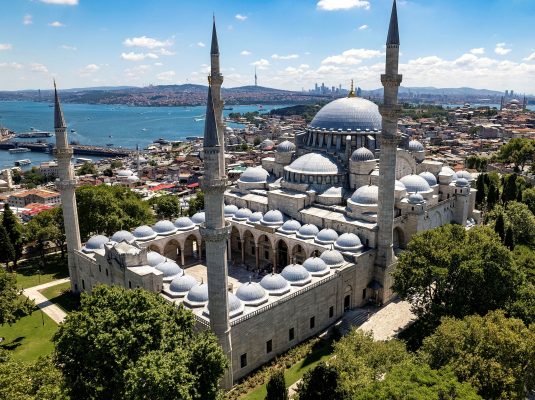
The following article presents a survey on some glorious pages of the history of Kairouan, the ancient capital of the Islamic Ifriqiya (present day Tunisia). Founded in 670 by ‘Uqba ibn Nafi', the Arab general in command of the Muslim conquest of North Africa, Kairouan flourished under the Aghlabid dynasty in the 9th century and was an important urban center of the Islamic west, with a rich architectural heritage and a thriving tradition of learning.
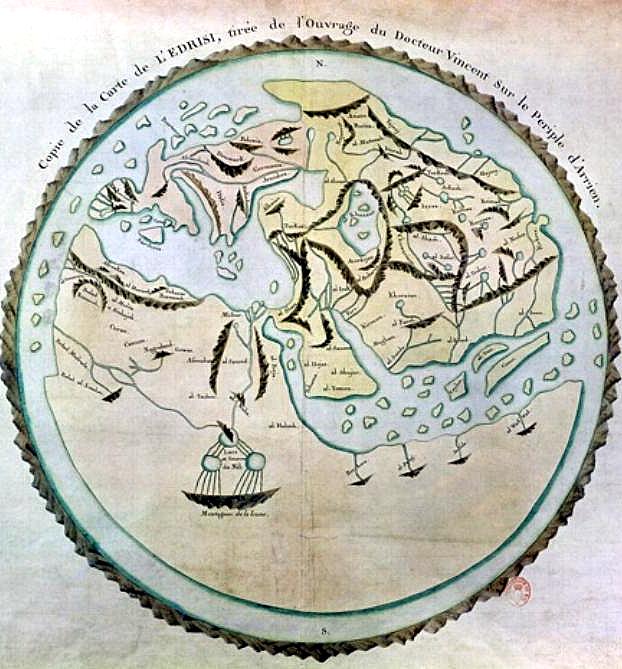
The history of the Islamic west offers glorious pages of contribution to world history in various fields. This article presents a survey on some salient aspects of the role played by Morocco in the civilisation of Western Islam from the 11th to the 14th centuries. After a special focus on the role played by the Almoravids and the Almohads in the geopolitics of the Western Mediteranean region, the scientific scene of mathematics, applied astronomy and geography, is surveyed through the works of Ibn al-Banna, Al-Murrakushi, Al-Idrisi and Ibn Battuta.
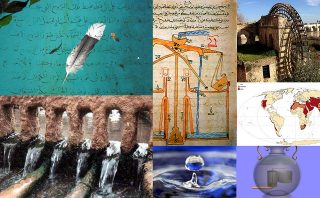
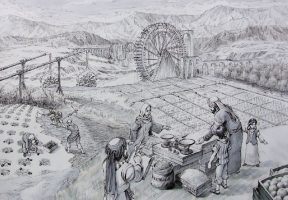
Dams are required in most hydraulic systems, for irrigation, regulating flow of rivers and in modern times for the production of energy. In the classical Islamic world, dam construction received a special attention as an integral part of large civil engineering works. Since the Umayyad Caliphate, dams were built in different Islamic regions. This article is a survey presenting the tradition of dam construction by Muslims, characterized by a rich variety of structures and forms.
The modern astronomical observatory as a research institute (as opposed to a private observation post as was the case in ancient times) is a creation of the Islamic scientific tradition. Since the early 9th century, the astronomers of Islamic lands worked in astronomical observtories in which they performed precise observations of the skies and produced accurate astronomical tables. The Islamic observatory was a dynamic scientific specialized institution with its own scientific staff, director, astronomical program, large astronomical instruments and building. Islamic observatories were also the earliest institutions to emphasize group research and in them theoretical investigations went hand in hand with observations.
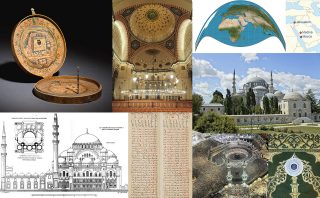
From the beginning of the Islamic history, the scholars developed the Islamic hijri calendar as a lunar calendar designed to organize timekeeping for religious and social needs. The development of the Islamic calendar and the different tasks related to it played a leading role in the advance of Arabic astronomy as an applied and theoretical science. The following article presents a survey on the Islamic hijri calendar and the varieties of timekeeping devices related to it. A special concern is devoted to the Ottoman contributions in this field.
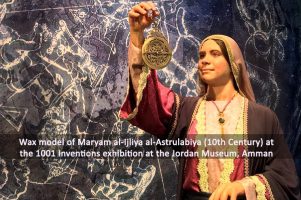
The history of the astrolabe begins more than two thousand years ago, but it is in the Islamic classical world that the astrolabe was highly developed and its uses widely multiplied. Introduced to Europe from Islamic Spain in the early 12th century, it was one of the major astronomical instruments until the modern times. In this concise and beautifully illustrated article, Emily Winterburn casts a short story of the Islamic art of making astrolabes – developing the different varieties, the description of their structure and parts and their uses in social, religious and scientific functions.
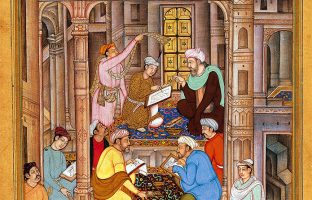
Islam prompted mankind to learn. Thus, from the beginning of Islamic history, the concrete symbol of Islam (the Mosque) became the centre of learning. The Arabic word for univeristy, Jami'a, was derived from Jami' (mosque). The following article presents a short survey on the educational role that some famous mosques played in spreading learning in Islamic society.
Abdel-Wahed El-Wakil is one of the leading voices in contemporary Islamic architecture and a practitioner known worldwide for his design of the Oxford University Centre for Islamic Studies. His use of traditional form and technique won him the 2009 Richard H. Driehaus Prize administered by the University of Notre Dame School of Architecture. The prize is awarded annually to an outstanding architect whose work applies the principles of classicism, including sensitivity to the historic continuum, the fostering of community, and consideration of the impact to the built and natural environment. Over the past four decades, El-Wakil has built mosques, public buildings and private residences throughout the Middle East, maintaining balance between continuance and change. The following article presents a coverage about the work and career of Abdel-Wahed El-Wakil and stresses the triumph of the Islamic architectural style in his designs.
In the following essay, Dr. Gunalan Nadarajan, Associate Dean of Research and Graduate Studies in the College of Arts and Architecture at Penn State University, draws on the work of al-Jazari, the famous 13th century Islamic scholar, engineer and scientist, to develop an alternative history of robotics. The work of Al-Jazari is considered as a significant contribution to the history of robotics and automation insofar as it enables a critical re-evaluation of classical notions and the conventional history of automation and therefore of robotics. In his analysis, the author details the notion of "Islamic automation", where the notions of control that have informed the conventional history of automation and robotics are substituted by subordination and submission to the rhythms of the machines.
Merv, was a major oasis-city in Central Asia, on the historical Silk Road, located near today's Mary in Turkmenistan. Several cities have existed on this strategic site, which was significant for the interchange of trade, culture and politics. In the early Islamic period, Merv was the capital of the province of Khurasan, and in the 12th century it was the largest city in the world. The following article surveys some aspects of learning, science and history of Merv as an Islamic city between the 10th and the 13th century. A special focus is laid on the scholars and scientists of Merv, the greatest of whom was Abd Al-Rahman Al-Khazini. Besides being a gifted astronomer, he is the author of Kitab mizan al-hikma, an encyclopedia of mechanics structured about the theory and the practice of various kinds of balances, especially the universal balance, an extremely precise scientific instrument for measuring the weights of bodies and their specific gravities.
During the period of Islamic-Arabic extraordinary activity in Science and Technology (9th-13th century), there are some recorded contributions to the area of Automatic Control mainly in the development of water clocks using float valve regulators, different level controls using float valves or combination of syphons and the development of On-Off control. In this short survey, Professor Dr Mohamed Mansour, former Professor of Control Engineering At ETH Zürich surveys the subject by investigating the words of Banu Musa, Al-Muradi, Ridhwan al-Sa'ati and Al-Jazari.
Arabic accounts report that Muslims introduced firearms into Islamic Spain, from where they passed to Italy, going from there to France, and finally Germany. Muslims also developed and refined gun powder and aquired rocket making technology. This article is a short account on the development of Muslim rocket technology, a constituent part of Islamic technology.
Among the original machines described in the corpus of Islamic technology, the six-cylinder "monobloc" piston pump designed by Taqi al-Din Ibn Ma'ruf in the late 16th century holds a special place. Working as a suction pump, this complex machine included components that are often associated with modern technology, such as a camshaft, a cylinder block, pistons, and non-return valves. In this article, Joseph Vera, an expert in re-engineering ancient inventions, describes how he created a SolidWorks CAD model of this remarkable pump, that he completed with a motion simulation. The conclusion he drew after creating the model and the simulation is that the engineers of the Islamic tradition, represented by Taqi al-Din, had a very solid grasp of kinematics, dynamics and fluid mechanics. He notes also that Taqi al-Din's "monobloc" pump is a remarkable example of a machine using renewable energy, a topic that is currently of utmost importance.
In this pioneering survey of some of the machines of Al-Jazari and Taqi Al-Din, Professor Salim Al-Hassani uses in-depth analysis with the tools of modern technology to make them live again. Relying on the original manuscripts and applying modern engineering technology and graphic modelling with computers, we can see these machines designed and described many centuries ago come to life.
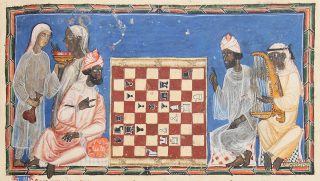
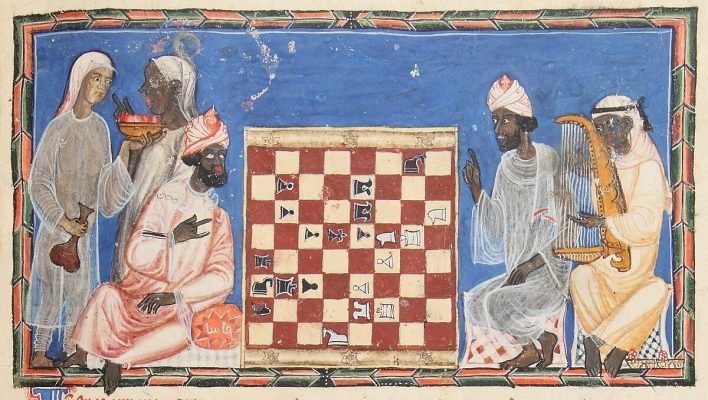
Chess probably originated in Persia or Central Asia before the seventh century and spread to India, China, the Middle East, North Africa and Europe, becoming so acculturated that the ability to play was simply part of being a civilized person. Across the miles and the centuries, the game changed, but its fascination and the mental training it offered did not. In this excellent article, published by Stewart Gordon in the July/August 2009 issue of Saudi Aramco World, the history of chess in the Islamic civilisation is narrated, surrounded by its historical and cultural context.
The complex of disciplines composed of mathematics, architecture and art in Islamic civilisation has been an important field of recent research. The scholars showed the interaction between mathematical reflexion and procedures and their implementation in designing concrete and symbolic forms in buildings, decoration and design. Furthermore, recent scholarship pointed out the amazing progress that this marriage brought about in prefiguring outstanding mathematical results that scientists proved only in late 20th century. In the following survey, Professor Salim Al-Hassani explores the various facets of this exciting subject that is still full of discoveries to come. By drawing attention to the ongoing debates in scholarly circles among physicicts, mathematicians and historians of science, art and architecture, he shows how the connection between theoretical and applied mathematics was fruitful and creative in the Islamic tradition.
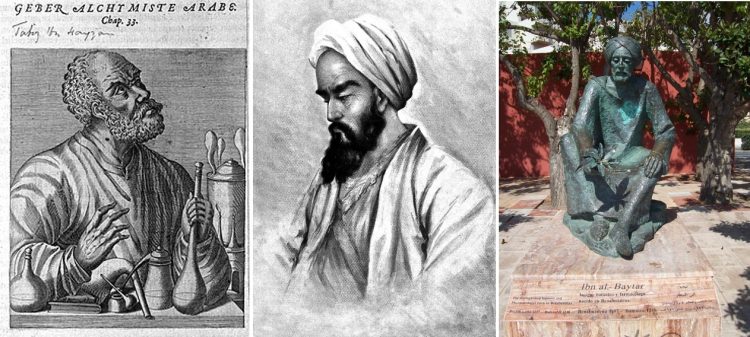
The scholars of Islamic culture worked extensively in the combined fields of botany, herbals and healing. Several scholars contributed to the knowledge of plants, their diseases and the methods of growth. They classified plants into those that grow from cuttings, those that grow from seed and those that grow spontaneously. Great Muslim figures such as Al-Dinawari, Ibn Juljul and Ibn al-Baytar made great progress in the field, as this article demonstrates. Muslim botanists knew how to produce new fruits by grafting; they combined the rose bush and the almond tree to generate rare and lovely flowers. The royal botanical gardens contained an endless variety of plants, indigenous and exotic, cultivated for their brilliant foliage, their delightful fragrance, or their culinary and medicinal virtues. In particular, they dealt with plants in a variety of ways, which included their study from a philological perspective, but most importantly for their curative and healing properties.
The following short article is based on the notes for a speech presented to the Muslim Heritage Awareness Group held at the Royal Society in London, 14 July 2009. The MHAG is a consulting network to the Foundation for Science, Technology and Civilisation (FSTC). The theme for this meeting was Environment and Muslim Heritage. The notes were published on Sir Crispin Tickell website.
Most educational systems, particularly those of Western countries, teach that industry was born in Europe and that the Industrial Revolution was the mother that delivered industrial mass production. Salim Al-Hassani, Chairman of FSTC and eminent expert in Islamic science and Muslim Heritage at large, challenges this view and presents an overview of the industrial and engineering processes which preceded the Industrial Revolution. Examining briefly the vast industry which stretched from China to Spain during the Muslim Civilisation (eighth-seventeenth centuries), he presents an overview of some randomly selected aspects of Muslim industrial production which highlights not only the Islamic antecedents of many processes and products widespread in our modern industrial system, but also how erroneous is the opinion that industrial production was alien to Islamic society.
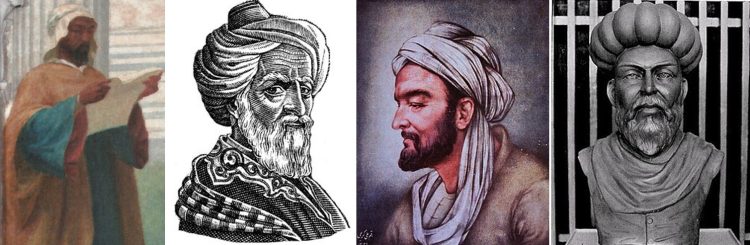
This study presents the theory of education in the philosophy of Ibn Sina, considered by ancient and modern scholars alike as the most famous of the Muslim philosophers. In his philosophical system, Ibn Sina outlined a complete theory of education and teaching. Departing from his view of the human being and of the relationship between the mental faculties and the body, and from a precise conception of knowledge and ethics, Ibn Sina's educational theory deals with the aims of education, the educational stages and the teaching methods for different classes of age, from infants to higher instruction of teeangers, with a focus on the teaching of girls.
The following article focuses on the cubic measure of the volume of the sphere in Arabic mathematics. After a short presentation of the Greek and Chinese ancient legacies on this topic, the article surveys thoroughly the different formulas methods proposed by the mathematicians of the Arabic-Islamic civilization from the 9th to the 17th century to measure the volume of the sphere. The achievements of eminent scholars are thus presented: Banu Musa, Al-Buzgani, Al-Karaji, Ibn Tahir al-Baghdadi, Ibn al-Haytham, Ibn al-Yasamin, Al-Khawam al-Baghdadi, Kamal al-Din al-Farisi, Jamshid al-Kashi, and Baha' al-Din al-'Amili.
Dr Adnan A. Al-Mazrooa and Professor Rabie E. Abdel-Halim
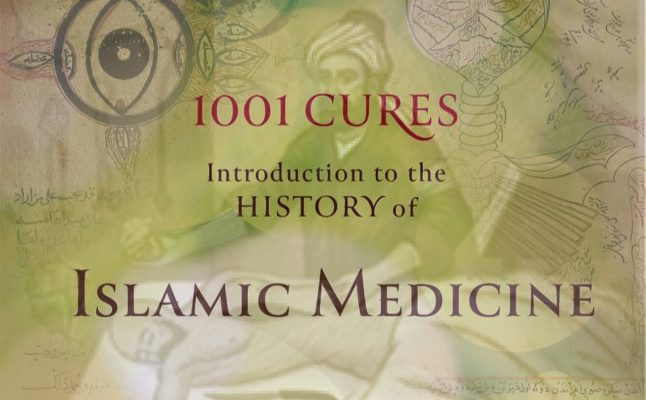
The following research article in a particular field of the history of medicine, written by two eminent experts, Drs Adnan A. Al-Mazrooa and Rabie E. Abdel-Halim, is composed of two parts. This first part surveys the use of narcotics for pain relief from Antiquity up to the Renaissance; the second part is a historical investigation in the contribution of the Islamic medical tradition to develop anaesthesia methods and uses. Reviewing some of the medical texts written by Muslim scholars from the 9th to the 14th century, the authors present evidence that anaesthesia monitoring and resuscitation were practised by Muslim scientists more than 1000 years ago.
The Ottomans paid great attention to medical practice and they were also greatly interested in the education and practice of physicians, surgeons and oculists. Many of these practiced their art both in and outside the palace, specially in major cities; and as members of the guilds they belonged to the Palace. The medical staff of the Palace, the medical madrasa in Istanbul and the practicing physicians in hospitals were expected to follow developments in medical sciences and even promote them. This original article by Professor Nil Sari presents a study of Ottoman medical practice and science based on new materials such as archival documents and manuscripts.
Experiment is what differentiates Muslim science from Greek speculation (called science). Experiment began with the Muslims, centuries before the likes of Grosseteste.
What
is Taught
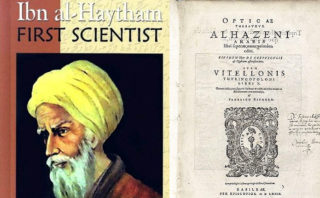
Snell is credited with the laws of reflection and refraction. However, Ibn Al-Haitham discovered the same phenomena in the 11th century.
Timeline
Discover Muslim Heritage through this interactive timeline.
Virtual
Civilisation
Explore Muslim Heritage through this interactive map of the Muslim World.
Topics
Browse all articles and topics on this website.